What Causes Receding Gums (And How to Stop It)
Posted on 10/4/2025 by Singing River Dentistry - Florence |
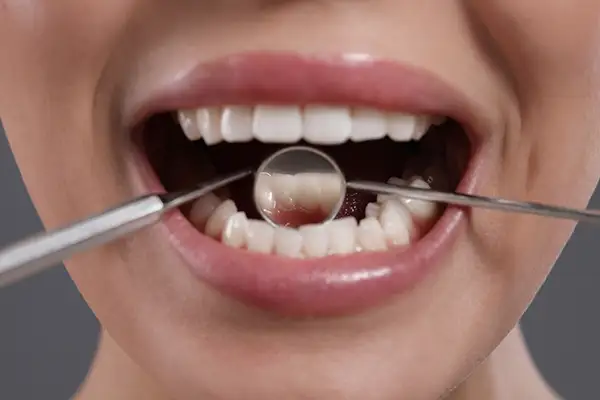
 Understanding what causes receding gums and how to stop the recession is one of the most common questions we hear from patients at our Florence, AL office, especially once they notice their gums starting to pull back from their teeth. Gum recession affects far more adults than most people realize, and it usually develops so gradually that you only notice once a tooth starts looking longer than its neighbors, feels sensitive to cold, or shows a darker line near the gumline. Understanding what causes receding gums and how to stop the recession is one of the most common questions we hear from patients at our Florence, AL office, especially once they notice their gums starting to pull back from their teeth. Gum recession affects far more adults than most people realize, and it usually develops so gradually that you only notice once a tooth starts looking longer than its neighbors, feels sensitive to cold, or shows a darker line near the gumline.
The good news is that pinpointing the cause of gum recession gives you real power to stop the process and protect what’s still healthy. In this guide, we’ll walk through why gums recede, the early signs that often get missed, what professional treatment looks like, and what you can change at home to keep things from getting worse. If gum health is something you want to stay ahead of, our periodontal care services are built for exactly that.
On This Page
What Receding Gums Actually Are
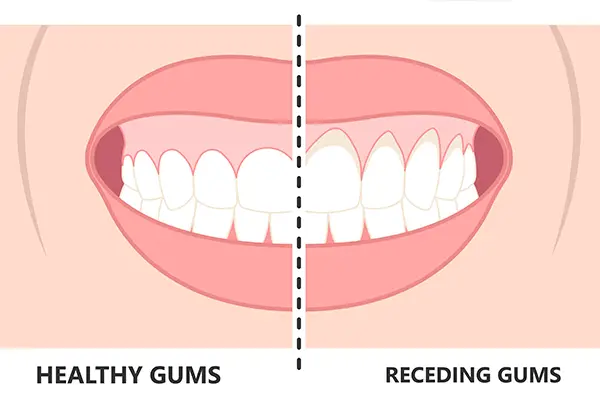
 Healthy gum tissue forms a tight, even collar around the base of each tooth, protecting the roots and sealing out bacteria. When the gums recede, that tissue migrates downward on the upper jaw (or upward on the lower jaw), exposing surfaces of the tooth that were never meant to face food, toothbrushes, or air. Once the root is exposed, several problems stack up at once: the root surface is much softer than enamel and decays faster, the tooth often becomes sensitive to cold and sweet foods, and the structures that anchor the tooth in the bone can begin to weaken over time. Healthy gum tissue forms a tight, even collar around the base of each tooth, protecting the roots and sealing out bacteria. When the gums recede, that tissue migrates downward on the upper jaw (or upward on the lower jaw), exposing surfaces of the tooth that were never meant to face food, toothbrushes, or air. Once the root is exposed, several problems stack up at once: the root surface is much softer than enamel and decays faster, the tooth often becomes sensitive to cold and sweet foods, and the structures that anchor the tooth in the bone can begin to weaken over time.
Recession itself isn’t a disease. It’s a signal that something else is happening, whether that something is active gum disease, mechanical wear from aggressive brushing, pressure from clenching and grinding, or simply genetics. Mild recession can often be stabilized, but the gum tissue you’ve already lost doesn’t grow back on its own. That’s why catching it early matters so much.
The Most Common Causes of Gum Recession
Gum recession rarely has just one cause. Most patients we see in Florence have a combination of factors stacking up over time, and pinpointing which ones apply is the first step toward stopping it. These are the drivers we see most often:
| • |
Gum disease – The most common driver. Bacteria below the gumline inflame and destroy supporting tissue, allowing the gum to pull back.
|
| • |
Aggressive brushing – Hard bristles and heavy pressure can wear gum tissue away mechanically, often most noticeable on the side opposite the dominant hand where the brush reaches more easily.
|
| • |
Grinding and clenching – Constant pressure on certain teeth drives recession at the gumline, sometimes without obvious wear on the tooth itself.
|
| • |
Thin gum tissue – Some people are genetically predisposed to thinner, more delicate gums that recede more easily.
|
| • |
Tobacco use – Both smoking and smokeless tobacco reduce blood flow to the gums and accelerate tissue breakdown.
|
| • |
Misaligned bite – Teeth that absorb more force than they should can show recession around the most stressed spots.
|
| • |
Lip or tongue piercings – Chronic friction against a specific spot of gum tissue can cause localized recession over time.
|
| • |
Hormonal shifts – Pregnancy, menopause, and certain medications can make gum tissue more sensitive and prone to recession. |
Knowing the cause matters because the fix is different for each one. Treating recession from gum disease without addressing the infection won’t work, and replacing your toothbrush without fixing a grinding habit won’t protect the new tissue either.
Signs Your Gums May Be Receding
Many people only notice recession once a tooth has clearly become longer than its neighbors. By then, the process has been quietly progressing for months or even years, and catching it earlier opens up a much wider range of options.
The most common early signal is sensitivity right at the gumline, especially to cold drinks or cold air. A close second is a tooth that looks slightly longer or more yellow at the base than it used to, since the exposed root has a different color than enamel. Patients sometimes describe a tiny groove or notch they can catch with a fingernail just below the gum, which is often where toothbrush abrasion or grinding pressure has been working away at the tooth.
The gums themselves give clues too. Healthy gums sit tight against the tooth in a pale pink shade. Gums that look red, puffy, or pull back when you press gently are often inflamed. If you also notice persistent bad breath or floss that snags in a spot that used to be smooth, that combination strongly points toward active recession with an underlying gum issue worth getting evaluated at a dental exam.
How Dentists Treat Gum Recession
Treatment depends entirely on what’s causing the recession and how far it has progressed. The goal is always twofold: stop the process, and where it makes sense, restore what was lost.
For recession driven by gum disease, the first step is usually a deep cleaning called scaling and root planing. This removes the bacterial buildup below the gumline that has been destroying tissue, and it allows the remaining gum to heal back against the tooth. Once the infection is under control, patients move into regular periodontal maintenance on a tighter schedule than standard cleanings to keep it from coming back.
When grinding or clenching is the driver, the fix is often a custom-fitted night guard that absorbs the pressure that was being transmitted into the gumline. If the bite itself is uneven, an occlusal adjustment can redistribute force more evenly across the teeth. For more severe cases of teeth grinding, we look at the bigger picture of how the teeth come together and protect them long-term.
For more advanced recession where significant tissue has been lost, gum graft procedures can cover exposed root surfaces using tissue from elsewhere in the mouth. This is typically reserved for cases where sensitivity hasn’t responded to other measures or where a tooth is at risk because the supporting tissue has thinned too much. Not every case needs grafting, and we’ll always walk you through whether the benefit is worth the procedure for your specific situation.
How to Stop Gum Recession From Getting Worse
The single most useful thing you can do at home is change how you brush. Switch to a soft-bristled brush (medium and hard bristles are too aggressive for adult gums), and use a gentle circular motion rather than a hard back-and-forth sawing pattern. An electric toothbrush with a pressure sensor can be a real help because it lights up or vibrates when you’re pressing too hard, which is the habit most of us didn’t know we had.
Flossing matters here too, but the technique matters more than the frequency. Floss should slide down between two teeth and then curve into a C-shape around one tooth at a time, gently scraping the side. Snapping it straight down against the gum, which feels efficient, is exactly what damages the tissue.
Beyond technique, the daily habits that protect against recession overlap with the habits that protect against most dental problems: reduce snacking on acidic foods that wear at the tooth surface near the gumline, stay hydrated to keep saliva flowing, quit tobacco if it applies, and keep your routine cleanings on schedule. Patients who catch recession early often only need a few small adjustments to stabilize their gums for years.
When to Talk to Your Dentist About Your Gums
If your gums are sensitive, look like they’re pulling back, or you’re just not sure what’s normal, we’d much rather take a look earlier than later. The team at Singing River Dentistry in Florence, AL can identify the cause, recommend a treatment plan tailored to your gums, and help you protect what’s healthy. Call us at 256-764-9955 or visit our homepage to request a visit.
Frequently Asked Questions
Can receding gums grow back on their own?
No, lost gum tissue doesn’t regrow naturally. The good news is that the process can usually be stopped once the cause is identified, and for more advanced cases, gum grafting procedures can restore lost coverage. Early intervention almost always means simpler treatment.
Is gum recession painful?
Recession itself is usually not painful, which is part of why it goes unnoticed for so long. What patients often feel first is sensitivity to cold or sweets where the root has become exposed. If you have actual gum tenderness or bleeding, that points more to active inflammation that needs attention.
Can I have receding gums without gum disease?
Yes, absolutely. Aggressive brushing, grinding pressure, thin gum tissue, and a misaligned bite can all cause recession in someone whose gums are otherwise healthy. That’s why identifying the cause matters so much, since fixing recession means fixing what’s driving it.
Will switching to a softer toothbrush help?
It often makes a meaningful difference, especially when paired with a gentler technique. Hard or even medium bristles, combined with pressure, can mechanically wear gum tissue away. A soft brush used in small circular motions is the safest combination for most adults.
How often should I see the dentist if I have gum recession?
Most patients with active or recent recession do best on a three-to-four month periodontal maintenance schedule rather than the standard six-month interval. This helps catch any new tissue loss early and keeps the bacteria load low enough to let healing happen.
|
|