What Causes Chronic Bad Breath? Understanding Halitosis
Posted on 4/13/2026 by SRD Tuscumbia |
 Chronic bad breath isn’t a hygiene problem; it’s a symptom, and the causes of chronic bad breath almost always trace back to a specific source in your mouth, sinuses, or overall health rather than to how often you brush. Halitosis (the clinical term for persistent bad breath) is one of the most common concerns patients bring up quietly at our Tuscumbia, AL practice, often after months or years of trying every mint, rinse, and toothpaste they can find. The good news: once the real source is identified, lasting fresh breath is almost always achievable. Chronic bad breath isn’t a hygiene problem; it’s a symptom, and the causes of chronic bad breath almost always trace back to a specific source in your mouth, sinuses, or overall health rather than to how often you brush. Halitosis (the clinical term for persistent bad breath) is one of the most common concerns patients bring up quietly at our Tuscumbia, AL practice, often after months or years of trying every mint, rinse, and toothpaste they can find. The good news: once the real source is identified, lasting fresh breath is almost always achievable.
This guide walks through the most common dental causes, the medical and lifestyle factors that often get overlooked, and why over-the-counter rinses tend to fall short. If you’ve been searching for real answers about halitosis, our approach to bad breath treatment starts with finding the source instead of masking it.
On This Page
Morning Breath vs. Chronic Halitosis
Most people wake up with some degree of morning breath. Saliva flow slows during sleep, and the bacteria that normally get rinsed away have several uninterrupted hours to multiply. A quick brush, a glass of water, and breakfast usually take care of it. The same goes for the lingering smell after garlic, onions, or coffee, which fades on its own within a few hours.
Chronic halitosis behaves differently. It hangs around throughout the day, returns shortly after brushing, and is often noticed by others before the person experiencing it picks up on it. A simple home check that gives a reasonable read: lick the inside of your wrist, let it dry for about ten seconds, then smell it. If there’s a noticeable odor, your breath likely carries something similar.
Persistent bad breath isn’t a sign that you’re failing at hygiene. It’s a sign that something in your mouth, your sinuses, your digestive system, or your overall health is asking for attention. Identifying which one is the work of the next several sections.
Dental Causes of Persistent Bad Breath
 The vast majority of chronic bad breath cases trace back to something happening inside the mouth. Research consistently suggests roughly 85 to 90 percent of halitosis has an oral source, which is good news because dental causes tend to be the most fixable once they’re properly identified. The vast majority of chronic bad breath cases trace back to something happening inside the mouth. Research consistently suggests roughly 85 to 90 percent of halitosis has an oral source, which is good news because dental causes tend to be the most fixable once they’re properly identified.
Bacteria on the Tongue
The back surface of the tongue is the single most common source of bad breath. It’s covered in tiny crevices and papillae where bacteria, food debris, and dead cells collect, breaking down into volatile sulfur compounds, the chemicals responsible for that distinct rotten-egg odor. Many people who brush religiously never clean their tongue, leaving the largest odor source untouched. A soft tongue scraper or the back of a toothbrush, used from back to front each morning, often makes a dramatic difference within days.
Gum Disease (Gingivitis and Periodontitis)
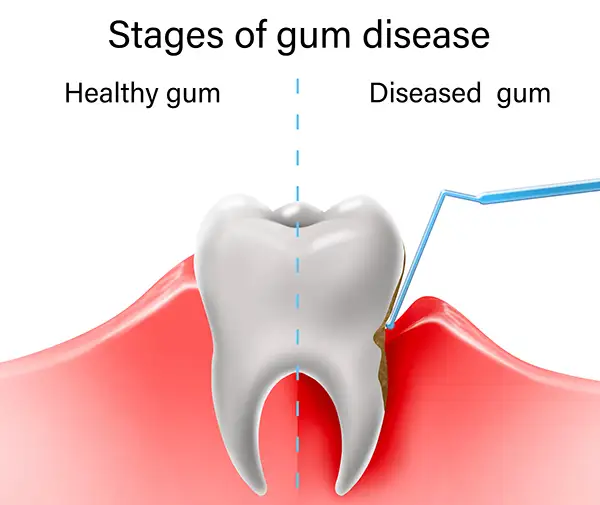
When plaque hardens into tartar along the gum line, the bacteria living in those pockets release sulfur byproducts that smell sour, musty, or metallic. This is one of the more stubborn causes because the bacteria live below the gum surface, where a toothbrush simply can’t reach. Bleeding gums when brushing or flossing, gum recession, and a bad taste in the mouth often accompany the smell. Targeted periodontal care focused on cleaning beneath the gum line is the only reliable way to address it.
Untreated Cavities and Failing Restorations
Decay creates pockets where bacteria and food debris settle, producing distinct odors as they break down. Cracked fillings, leaky crown margins, and failed root canals can do the same thing. Patients are sometimes surprised when filling a cavity resolves a smell they’ve had for years and assumed was permanent.
Food Trapping Around Bridges, Implants, and Dentures
Dental restorations work beautifully when they fit well, but ill-fitting dentures, bridges with poor margins, or implants without proper home care can become collection points for food and bacteria. Dentures especially tend to absorb odors over time if they aren’t cleaned daily and soaked overnight. A professional fit-check and a deep clean often resolve the problem quickly.
Dry Mouth (Xerostomia)
Saliva is your mouth’s natural rinse, washing away food particles and neutralizing acids throughout the day. When saliva flow drops because of medications, mouth breathing, sleep apnea, or certain medical conditions, bacteria multiply and odors intensify. Dozens of common medications list dry mouth as a side effect, including antihistamines, antidepressants, blood pressure drugs, and many sleep aids. Addressing chronic dry mouth often resolves halitosis that nothing else seems to touch.
Medical and Lifestyle Causes to Consider
When the dental exam comes back clean, the source is usually elsewhere in the body. These are the non-dental contributors that come up most often in our conversations with patients.
Sinus infections, chronic post-nasal drip, and seasonal allergies produce a steady flow of mucus that bacteria feed on at the back of the throat, creating odor that brushing cannot reach. Treatment usually involves working with a primary care doctor or ENT, but resolving the sinus issue typically resolves the breath alongside it.
GERD, or chronic acid reflux, lets stomach contents drift up into the throat, often during sleep. The acid itself has a sour odor, and the irritation it causes in the throat encourages bacterial growth. Many patients are unaware they have silent reflux until the connection between their reflux and their breath is pointed out.
Tonsil stones are a surprisingly common and often overlooked cause. These small calcified deposits form in the tonsil crypts and release an intense sulfur smell, sometimes accompanied by the feeling of something stuck in the throat. They can often be gently dislodged at home or, in stubborn cases, treated by an ENT.
Less commonly, certain systemic conditions produce distinctive breath odors. Uncontrolled diabetes can create a sweet or fruity scent from ketones, while advanced kidney or liver issues can produce a urine-like or fishy smell. These are rare and serious, but worth mentioning because the breath can sometimes be one of the first noticeable signs.
Lifestyle factors play a role too. Smoking and tobacco use coat the mouth and lungs with odor-producing compounds while drying out oral tissues. Alcohol has a similar drying effect. Low-carb and ketogenic diets often produce keto breath, a slightly fruity or metallic smell from the body burning fat for fuel, and intermittent fasting can do the same. Strong foods like garlic, onions, certain spices, and coffee cause temporary odor because their compounds enter the bloodstream and exit through the lungs, which is why brushing alone doesn’t fully clear the smell until they’ve fully metabolized.
Why Mouthwash Doesn’t Solve the Underlying Problem
Mouthwash is usually the first thing people reach for, and for short-term social moments it has its place. For true chronic halitosis, though, it tends to fall short for a few specific reasons.
Most over-the-counter mouthwashes mask odors with mint or alcohol-based flavoring rather than killing the bacteria producing them. The fresh feeling is real but temporary, often fading within an hour. Alcohol-based rinses can actually make things worse over time because they dry out the mouth, reducing the protective saliva that normally controls bacterial growth. Antibacterial rinses with chlorhexidine or cetylpyridinium chloride work better in the short term, but they still can’t reach the deep pockets around the gums where most odor-producing bacteria live, and they can’t clear coating from the tongue or treat the underlying cause.
The treatment that actually works depends entirely on the cause. Tongue cleaning addresses tongue bacteria. Professional dental cleanings address tartar buildup. Periodontal therapy addresses gum disease. Restorative work addresses leaky fillings or ill-fitting bridges. Medical evaluation addresses sinus, reflux, or systemic causes. A bottle of mouthwash, no matter how strong or expensive, can’t do any of these things on its own.
How We Diagnose and Treat Chronic Halitosis
 When a patient comes to our Tuscumbia office frustrated by chronic bad breath, we start by taking the time to actually identify what’s going on. The process usually begins with a conversation: when did the smell start, when is it worst, what has helped temporarily, and what medications or health conditions might be relevant. This part matters, because the pattern of the odor often points toward the source. When a patient comes to our Tuscumbia office frustrated by chronic bad breath, we start by taking the time to actually identify what’s going on. The process usually begins with a conversation: when did the smell start, when is it worst, what has helped temporarily, and what medications or health conditions might be relevant. This part matters, because the pattern of the odor often points toward the source.
From there, a thorough oral exam looks for the dental sources first. We measure gum pocket depths, check for tartar deposits, inspect the tongue for coating or fissures, examine existing restorations for gaps or leaks, and look for signs of dry mouth. Digital imaging helps us spot decay or infections hiding between teeth or beneath old work that the eye alone would miss.
If the source is dental, treatment is usually some combination of professional cleaning, periodontal therapy, restorative work on problem teeth, and a refined home care routine that includes daily tongue cleaning. Most patients notice a meaningful difference within one to two weeks of addressing the actual cause.
When the dental exam comes back clean, we typically refer to a primary care provider or ENT to investigate sinus, reflux, or other systemic possibilities. The mouth is connected to the rest of the body, and chronic bad breath without a dental source deserves a thoughtful next look elsewhere.
Taking the Next Step Toward Fresher Breath
You don’t have to live with chronic bad breath, and you shouldn’t have to wonder whether the people around you notice. If you’ve tried the usual fixes without lasting results, the next step is identifying the real source so it can actually be treated. Our team at Singing River Dentistry sees patients from Tuscumbia, Florence, Muscle Shoals, and the surrounding communities for this exact concern, and we approach it with the same care and discretion as any other dental issue. Call 256-383-0377 or reach out to our Tuscumbia office to schedule a visit.
Frequently Asked Questions
Can I reliably tell if I have bad breath on my own?
It’s genuinely difficult because we adapt to our own scent over time. The wrist-lick test (lick the inside of your wrist, let it dry, then smell it) gives a decent read at home. Asking a trusted family member is more reliable. If you find yourself constantly self-conscious despite a solid hygiene routine, a dental visit is worth scheduling.
How quickly can chronic bad breath improve once the cause is found?
For most dental causes, patients notice meaningful improvement within one to two weeks of starting treatment. Tongue-bacteria cases can shift within days of adding consistent tongue cleaning. Periodontal cases take a bit longer because the gum tissue needs time to heal after the initial deep cleaning. Medical causes follow their own timeline.
Is bad breath always a dental problem?
No. Roughly 85 to 90 percent of chronic halitosis traces back to something inside the mouth, but the remaining cases involve sinus, digestive, respiratory, or systemic causes. A thorough dental exam can usually rule the mouth in or out as the source, which then guides where to look next.
Are tonsil stones really that common?
More common than most people realize. They form when food particles, mucus, and bacteria collect in the small crypts of the tonsils and harden into whitish or yellowish pellets. They tend to produce an unmistakable strong sulfur smell. Gargling, gentle dislodging with a soft cotton swab, or in stubborn cases an ENT visit, can resolve them.
Should I switch to an alcohol-free mouthwash?
For most people with chronic bad breath, yes. Alcohol-based rinses dry the mouth out, which over time can make bacterial growth worse. Alcohol-free options tend to be gentler. Mouthwash is best thought of as a supplement to brushing, flossing, and tongue cleaning rather than a substitute, and it works best as part of a complete oral hygiene routine.
Does keto breath eventually go away?
For most people who stay on a ketogenic or very low-carb diet, the distinctive breath fades after the first few weeks as the body adapts to using ketones for fuel. Staying well-hydrated, chewing sugar-free gum, and consistent tongue cleaning all help during the transition. If it persists for months without easing, other causes are worth exploring.
|
|